
Lumbar Epidural Steroid Injection
Pain that travels from the lower back into the buttock or leg may develop when a spinal nerve becomes irritated or inflamed. When symptoms persist despite appropriate conservative treatment, a lumbar epidural steroid injection (ESI)may be considered to reduce inflammation around the affected nerve and provide relief from radicular pain.
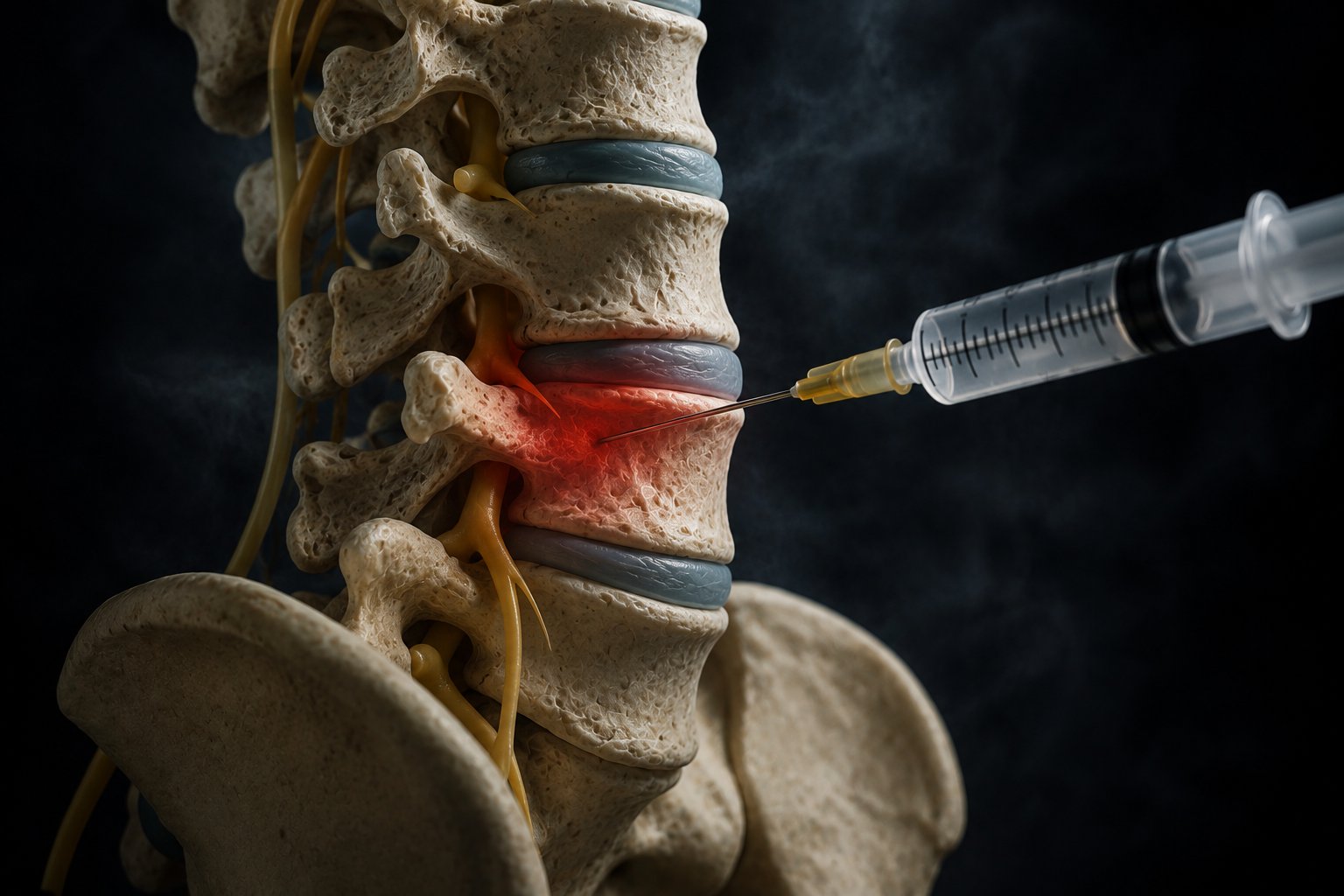
Minimally Invasive Treatment for Sciatica and Lumbar Nerve Pain
Lumbar epidural steroid injections are commonly used as part of nonsurgical treatment for sciatica, lumbar radiculopathy, herniated discs, and certain forms of lumbar spinal stenosis.
At TOPS Institute, we provide image-guided lumbar epidural steroid injections in Los Angeles and Beverly Hills as part of a personalized interventional pain management plan. Our goal is to identify the source of symptoms and precisely target treatment to the affected area of the lumbar spine.
A lumbar epidural steroid injection is a minimally invasive procedure that delivers anti-inflammatory medication into the epidural space surrounding the spinal nerves in the lower back.
The epidural space is located within the spinal canal but outside the protective membrane surrounding the spinal cord and spinal nerves.
When a lumbar nerve root becomes irritated or inflamed, patients may experience pain extending from the lower back into the buttock, thigh, leg, or foot.
During an epidural steroid injection, medication is delivered near the affected spinal nerves with the goal of reducing inflammation and relieving nerve-related pain.
An epidural injection does not remove a herniated disc or reverse spinal degeneration. Instead, it targets the inflammatory component of the patient’s symptoms.
Lumbar epidural steroid injections are most commonly used for radicular pain, meaning pain associated with irritation or inflammation of a spinal nerve root.
Depending on the patient’s diagnosis, an injection may be considered for:
- Lumbar radiculopathy
- Sciatica
- Lumbar disc herniation
- Lumbar spinal stenosis
- Foraminal stenosis
- Degenerative changes causing nerve irritation
- Certain cases of persistent nerve-related pain after lumbar spine surgery
The procedure is generally more specifically targeted toward nerve-related leg pain than nonspecific lower back pain alone.
A comprehensive evaluation helps determine whether symptoms correspond to a lumbar nerve root and whether an epidural injection is appropriate.
Sciatica commonly describes pain traveling from the lower back or buttock into the leg along the distribution of the sciatic nerve.
A common underlying cause is lumbar radiculopathy, in which one or more spinal nerve roots contributing to the sciatic nerve become irritated or compressed.
Symptoms may include:
- Shooting leg pain
- Burning pain
- Electric-like sensations
- Numbness
- Tingling
- Pins and needles
- Leg or foot weakness
When inflammation around a lumbar nerve root contributes to these symptoms, an epidural steroid injection may be considered.
A lumbar disc herniation occurs when material from an intervertebral disc extends beyond its normal boundary.
If displaced disc material irritates or compresses a nearby nerve root, patients may develop lumbar radiculopathy and sciatica.
An epidural steroid injection does not push the disc back into place or repair the herniation.
Instead, corticosteroid medication is used to help reduce inflammation around the affected nerve root, potentially reducing pain while the underlying condition is managed.
Lumbar spinal stenosis is narrowing within the lower spine that can reduce the space available for spinal nerves.
For selected patients, stenosis can contribute to nerve irritation and symptoms such as:
- Leg pain
- Numbness
- Tingling
- Heaviness or discomfort in the legs
When inflammation around an affected nerve contributes to symptoms, an epidural steroid injection may be considered as part of a nonsurgical treatment plan.
The injection does not widen the spinal canal or reverse the structural stenosis.
The injection typically contains a corticosteroid medication designed to reduce inflammation around irritated spinal nerves.
A local anesthetic may also be used depending on the procedure and clinical circumstances.
Reducing inflammation around the affected nerve may help decrease:
- Radiating leg pain
- Burning pain
- Tingling
- Other nerve-related symptoms
Pain relief can also make it easier for some patients to participate in physical therapy, exercise, and rehabilitation.
The response varies between patients, and an epidural steroid injection cannot guarantee complete or permanent pain relief.
Lumbar epidural steroid injections are typically performed as outpatient procedures.
At TOPS Institute, image guidance is used to help accurately position the needle and deliver medication to the intended area.
The procedure generally involves:
- 1The patient is positioned to allow access to the lumbar spine.
- 2The treatment area is cleaned and prepared.
- 3Local anesthetic may be used to numb the skin and surrounding tissues.
- 4Using imaging guidance, the physician carefully advances the needle toward the appropriate epidural space.
- 5Contrast material may be used when appropriate to confirm needle placement and medication distribution.
- 6The prescribed medication is delivered into the targeted epidural region.
- 7The needle is removed and the patient is monitored following the procedure.
The specific technique varies depending on the patient’s anatomy, diagnosis, and location of nerve involvement.
There are several approaches to accessing the lumbar epidural space.
Interlaminar Epidural Injection
An interlaminar epidural steroid injection accesses the epidural space between adjacent vertebral structures.
Medication can spread within the epidural space to reach irritated spinal nerves.
Transforaminal Epidural Injection
A lumbar transforaminal epidural steroid injection delivers medication near a specific nerve root through the neural foramen, the opening where the nerve exits the spine.
This approach may be selected when treatment needs to target a particular lumbar nerve.
Caudal Epidural Injection
A caudal epidural steroid injection accesses the epidural space through the sacral hiatus near the lower end of the spine.
This approach may be appropriate in certain clinical situations depending on the patient’s anatomy and symptoms.
The appropriate approach is determined based on the patient’s diagnosis, imaging, anatomy, and treatment goals.
A lumbar epidural steroid injection may be considered for patients with persistent nerve-related symptoms that correspond to a lumbar spinal condition.
Potential candidates may include patients who:
- Have lumbar radiculopathy or sciatica
- Have radiating pain extending into the leg
- Have a lumbar disc herniation affecting a nerve
- Have spinal or foraminal stenosis causing radicular symptoms
- Continue to experience symptoms despite conservative treatment
- Have symptoms that interfere with walking, exercise, work, or sleep
- Are appropriate candidates based on medical history and imaging findings
An epidural steroid injection is not necessarily appropriate for every patient with lower back pain.
Evaluation is important to determine whether the patient’s symptoms are actually nerve-related.
The duration of pain relief varies significantly between patients.
Some patients experience substantial improvement, while others experience partial or limited relief. When successful, benefits may last for weeks, months, or longer depending on the underlying condition and individual response.
The injection is often used as one component of a broader treatment plan rather than as a permanent cure for the structural condition causing nerve irritation.
Some patients notice improvement relatively soon after the procedure, while the anti-inflammatory effect of the corticosteroid may take several days to become more noticeable.
Temporary soreness around the injection area can occur.
Patients should follow their specific post-procedure instructions and contact their provider with questions or unexpected symptoms.
The appropriate number and frequency of epidural steroid injections varies based on:
- The patient’s diagnosis
- Response to previous injections
- Overall health
- Medications
- Steroid exposure
- Clinical guidelines
- Treatment goals
Repeated injections should not be performed automatically on a predetermined schedule.
At TOPS Institute, the decision to repeat an epidural injection is based on the patient’s response and individual clinical circumstances.
Lumbar epidural steroid injections are commonly performed, but all medical procedures have potential risks.
Potential risks and side effects may include:
- Temporary injection-site soreness
- Temporary increase in pain
- Headache
- Bleeding
- Infection
- Medication-related effects
- Allergic reaction
- Nerve injury
- Other rare complications
Patients taking blood-thinning medications or those with certain medical conditions may require additional planning before the procedure.
TOPS Institute evaluates each patient’s medical history, medications, imaging, and individual risk factors before recommending treatment.
Lumbar epidural steroid injections are generally outpatient procedures, and most patients return home the same day.
Patients receive specific instructions regarding activity after the injection.
Temporary soreness may occur around the injection site. Depending on the patient’s condition and response, normal activities may be resumed according to the physician’s recommendations.
The goal is often to combine pain reduction with rehabilitation, exercise, or other treatments designed to improve long-term function.
A lumbar epidural steroid injection is most effective when it is used for the right diagnosis and directed toward the appropriate spinal level.
At TOPS Institute, we take a diagnosis-driven approach to epidural injections.
We evaluate the relationship between a patient’s symptoms, neurological findings, and imaging before determining whether an epidural injection is appropriate and which approach should be used.
For patients with sciatica, lumbar radiculopathy, lumbar disc herniation, or selected cases of lumbar spinal stenosis, an image-guided lumbar epidural steroid injection may help reduce inflammation around an affected nerve and improve function.
For patients seeking lumbar epidural steroid injections in Los Angeles or Beverly Hills, TOPS Institute provides personalized interventional pain management focused on precise diagnosis and targeted treatment.
Frequently Asked Questions About Lumbar Epidural Steroid Injections
A lumbar epidural steroid injection is a minimally invasive procedure that delivers anti-inflammatory medication into the epidural space surrounding spinal nerves in the lower back. It is commonly used to treat radicular pain caused by an irritated or inflamed lumbar nerve root.
They may help appropriately selected patients when sciatica results from inflammation or irritation of a lumbar nerve root. The injection is intended to reduce inflammation around the affected nerve.
No. An epidural steroid injection does not physically repair or remove a herniated disc. It may reduce inflammation around a nerve irritated by the herniation and help relieve associated radicular symptoms.
The duration varies between patients. Some experience relief for weeks or months, while others have shorter or limited improvement. Results depend on the underlying condition and individual response.
Some patients notice improvement relatively quickly, but the corticosteroid’s anti-inflammatory effect may take several days to develop.
Patients may feel pressure or temporary discomfort during the procedure. Local anesthetic is generally used to help minimize discomfort around the injection site.
“Epidural steroid injection” is a broad category of procedures that deliver medication into the epidural space. A transforaminal epidural injection is a specific approach that delivers medication near an individual spinal nerve root through the neural foramen.
Not necessarily. A limited response to an epidural injection does not automatically mean surgery is required. The next step depends on the diagnosis, neurological findings, imaging, severity of symptoms, and other treatments already attempted.
Persistent pain traveling from the lower back into the buttock or leg may indicate irritation of a lumbar spinal nerve.
A comprehensive evaluation can help determine whether an epidural steroid injection—and which epidural approach—is appropriate for your symptoms.
Schedule a consultation with TOPS Institute in Los Angeles or Beverly Hills to learn whether a lumbar epidural steroid injection may be appropriate for your lower back and leg pain.
Schedule an Appointment