
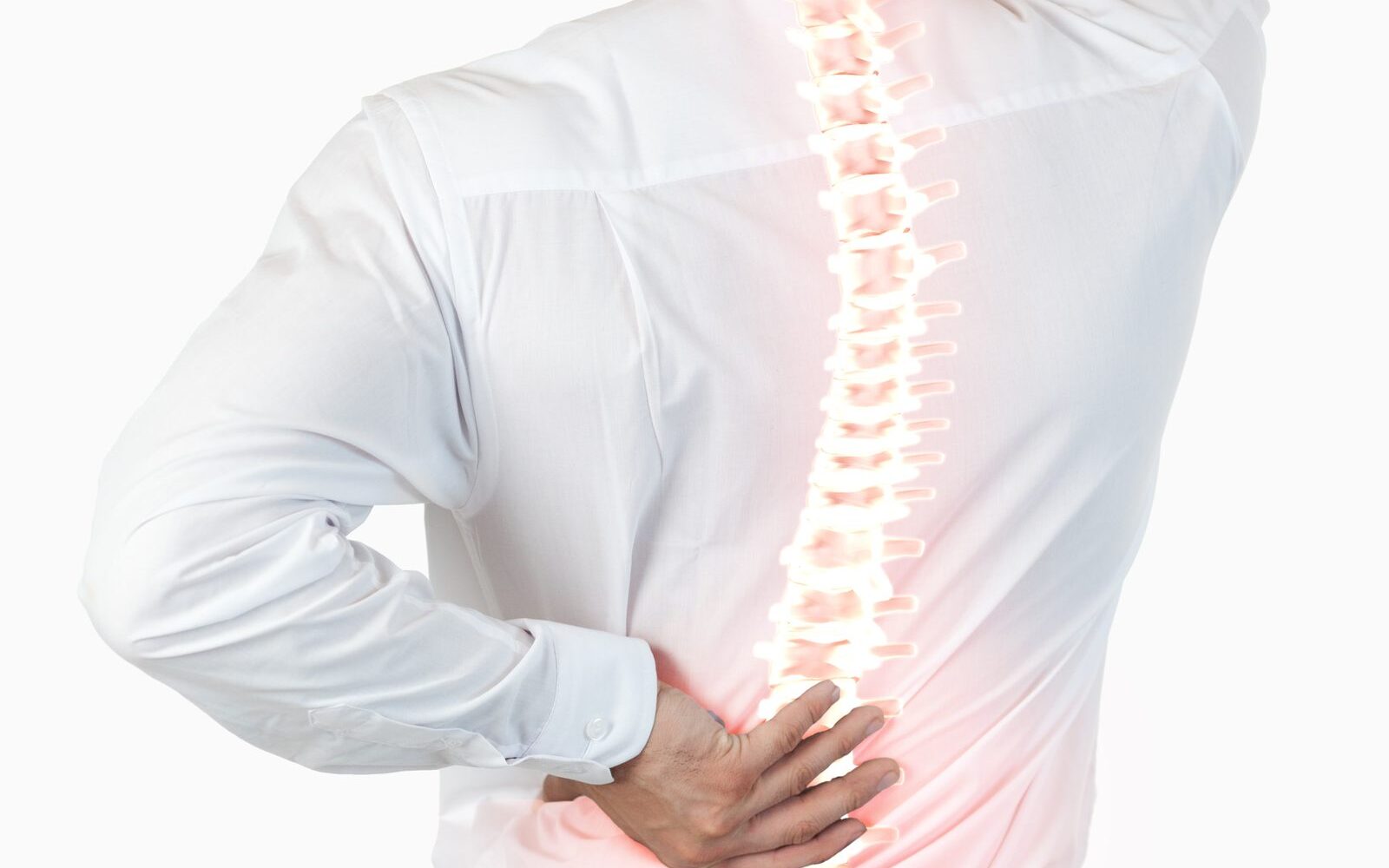
Specialized Care for Disc-Related Lower Back Pain
Persistent lower back pain, stiffness, or discomfort with sitting, bending, lifting, and other everyday movements may sometimes be associated with lumbar degenerative disc disease, a condition involving age-related or degenerative changes in the intervertebral discs of the lower spine.
Despite its name, degenerative disc disease is not a disease in the traditional sense. Spinal discs naturally change over time, and many people develop disc degeneration without experiencing pain. When these changes contribute to inflammation, altered spinal mechanics, or irritation of nearby nerves, however, they may become a source of persistent lower back symptoms.
At TOPS Institute, we provide comprehensive evaluation and personalized treatment for lumbar degenerative disc disease in Los Angeles and Beverly Hills. Our approach focuses on determining whether disc degeneration is actually contributing to a patient’s symptoms and developing a treatment plan based on the source of pain, functional limitations, and individual needs.
Schedule a Consultation
What Is Lumbar Degenerative Disc Disease?
Lumbar degenerative disc disease refers to degenerative changes affecting the intervertebral discs of the lower spine.
The lumbar spine consists of five vertebrae separated by spinal discs. These discs act as cushions between the vertebrae, help absorb forces placed on the spine, and contribute to spinal flexibility and movement.
Each disc consists of a softer inner portion called the nucleus pulposus surrounded by a stronger outer layer called the annulus fibrosus.
Over time, spinal discs can:
- Lose water content
- Become less flexible
- Lose disc height
- Develop small tears or fissures
- Become less effective at absorbing forces
- Place greater stress on surrounding spinal structures
These changes are common with aging and do not always cause pain.
Degenerative disc disease becomes clinically important when disc changes are associated with symptoms or contribute to other spinal conditions.
What Causes Lumbar Disc Degeneration?
Spinal discs naturally change as part of the aging process, but the rate and severity of degeneration vary considerably between individuals.
Factors that may contribute to lumbar disc degeneration include:
- Normal aging
- Genetics
- Repetitive stress on the lower back
- Previous spinal injuries
- Physically demanding work
- Repeated bending, lifting, or twisting
- Changes in spinal biomechanics
- Previous disc injury or herniation
As a disc loses hydration and height, the way forces are distributed throughout the lumbar spine may change. This can place additional stress on nearby vertebrae, facet joints, ligaments, and other structures.
For this reason, lumbar degenerative disc disease may occur alongside other conditions such as lumbar spondylosis, lumbar disc herniation, and lumbar spinal stenosis.
Symptoms of Lumbar Degenerative Disc Disease
Many people have degenerative changes visible on an MRI or X-ray without experiencing symptoms.
When lumbar disc degeneration is symptomatic, patients may experience:
- Persistent or recurring lower back pain
- Deep aching discomfort in the lower back
- Lower back stiffness
- Pain associated with prolonged sitting
- Pain with bending, lifting, or twisting
- Reduced spinal mobility
- Pain that worsens with certain activities
- Discomfort that extends into the buttocks or upper thighs
- Periods when pain becomes more intense before improving again
Symptoms vary depending on which discs and surrounding structures are affected.
If degenerative changes contribute to narrowing or irritation around a spinal nerve, patients may also develop radiating leg pain, numbness, tingling, or weakness.
These nerve-related symptoms may indicate lumbar radiculopathy (sciatica) rather than isolated disc-related lower back pain.
Learn More About Lumbar Radiculopathy (Sciatica)
Lumbar Degenerative Disc Disease vs. Herniated Disc
Lumbar degenerative disc disease and lumbar disc herniation are related but distinct conditions.
Degenerative disc disease describes gradual structural and functional changes within a spinal disc.
A lumbar disc herniation occurs when disc material extends beyond its normal boundary through a weakened or disrupted portion of the disc.
Disc degeneration can make a disc more vulnerable to herniation, meaning the two conditions may occur together. However, a patient can have degenerative disc disease without a herniated disc and can also develop a disc herniation without extensive degeneration.
Determining which condition is associated with a patient’s symptoms is an important part of diagnosis and treatment planning.
Learn More About Lumbar Disc Herniation
Lumbar Degenerative Disc Disease vs. Lumbar Spondylosis
These terms are also frequently confused.
Lumbar degenerative disc disease primarily describes degenerative changes affecting the spinal discs.
Lumbar spondylosis is a broader term that can encompass degenerative changes affecting multiple structures of the lumbar spine, including the discs, vertebrae, and facet joints.
The conditions commonly coexist, particularly as the spine changes with age.
Learn More About Lumbar Spondylosis (Back Arthritis)
How Is Lumbar Degenerative Disc Disease Diagnosed?
Diagnosing symptomatic degenerative disc disease requires more than identifying disc degeneration on an imaging study.
At TOPS Institute, evaluation may include a detailed review of:
- Where the pain occurs
- How long symptoms have been present
- Activities and positions that worsen or relieve pain
- Whether symptoms travel into the legs
- Numbness, tingling, or weakness
- Previous spinal injuries
- Previous treatments or procedures
- How symptoms affect work, exercise, sleep, and everyday activities
A physical examination may evaluate spinal mobility, strength, sensation, reflexes, tenderness, and movements that reproduce symptoms.
When clinically appropriate, imaging may also be recommended.
An MRI can provide detailed information about spinal discs, nerve roots, and surrounding soft tissues. X-rays may help evaluate disc height, spinal alignment, and other degenerative changes.
The presence of disc degeneration on imaging alone does not prove that the disc is responsible for pain. Clinical findings and imaging should be considered together.
How Is Lumbar Degenerative Disc Disease Treated?
Treatment is individualized based on the source and severity of symptoms, associated spinal conditions, functional limitations, overall health, and response to previous treatment.
When appropriate, conservative treatment may include:
- Physical therapy
- Home exercise
- Activity modification
- Core strengthening
- Flexibility and mobility exercises
- Appropriate medications
- Posture and ergonomic modifications
- Gradual return to activity
The goal is to improve function and manage symptoms while helping patients remain as active as possible.
When symptoms persist despite conservative treatment, additional evaluation may help determine whether another spinal structure or nerve is contributing to the patient’s pain and whether interventional pain management is appropriate.
When Disc Degeneration Causes Nerve Pain
Degenerative disc disease does not always remain isolated to the disc itself.
Loss of disc height and other degenerative changes can reduce the space available for spinal nerves. Disc degeneration may also occur alongside a disc herniation or spinal stenosis.
If a spinal nerve becomes irritated or compressed, patients may develop lumbar radiculopathy, with symptoms such as:
- Shooting leg pain
- Sciatica
- Numbness
- Tingling
- Burning sensations
- Muscle weakness
When clinically appropriate, an epidural steroid injection may be considered to address inflammation associated with an irritated spinal nerve.
Depending on the location and pattern of symptoms, treatment may include:
Lumbar Epidural Steroid Injection
or
Lumbar Transforaminal Epidural Steroid Injection
These procedures are directed toward nerve-related symptoms rather than treating disc degeneration itself.
When Degeneration Affects the Facet Joints
Degenerative changes in the discs can alter the way forces are distributed through the lumbar spine. In some patients, this may place additional stress on the facet joints and contribute to facet-mediated lower back pain.
When the facet joints are identified as a source of pain, interventional treatment may include:
Lumbar Facet Joint Injections
Lumbar Medial Branch Blocks
Lumbar Radiofrequency Ablation
The appropriate treatment depends on identifying which structure is responsible for the patient’s symptoms rather than treating degenerative changes seen on imaging alone.
Does Lumbar Degenerative Disc Disease Require Surgery?
Most patients with degenerative disc changes do not automatically require surgery.
Nonsurgical management may be appropriate depending on the patient’s symptoms, neurological findings, and functional limitations.
Surgical evaluation may be considered in certain circumstances, particularly when structural changes contribute to significant neurological impairment, spinal instability, or persistent symptoms that have not responded to appropriate nonsurgical treatment.
The presence of disc degeneration on an MRI by itself is not an indication for surgery.
When Should You See a Pain Specialist?
An evaluation may be appropriate when lower back pain:
- Persists despite conservative care
- Repeatedly returns
- Interferes with sitting or standing
- Limits work or exercise
- Makes bending or lifting difficult
- Interferes with sleep
- Begins traveling into the buttock or leg
- Is accompanied by numbness, tingling, or weakness
Seek prompt medical attention for new or rapidly worsening weakness, loss of bowel or bladder control, numbness around the groin or saddle region, or other significant neurological changes.
Lumbar Degenerative Disc Disease Treatment at TOPS Institute
Degenerative changes are extremely common in the lumbar spine, particularly as people age. The challenge is determining whether those changes actually explain a patient’s pain.
At TOPS Institute, we take a diagnosis-driven approach to lower back pain. We evaluate symptoms, physical findings, neurological function, imaging, and associated spinal conditions before recommending treatment.
When disc degeneration contributes to another identifiable source of pain—such as nerve irritation or facet-mediated pain—targeted interventional procedures may be considered when clinically appropriate.
Our goal is to help patients understand what is causing their symptoms and develop a personalized treatment plan focused on reducing pain, restoring function, and maintaining an active lifestyle.
For patients seeking lumbar degenerative disc disease treatment in Los Angeles or Beverly Hills, TOPS Institute provides specialized interventional pain management with an emphasis on nonsurgical and minimally invasive options when appropriate.
Schedule a Consultation
Frequently Asked Questions About Lumbar Degenerative Disc Disease
Is degenerative disc disease actually a disease?
Despite the name, degenerative disc disease is not a disease in the traditional sense. It describes structural and functional changes that occur in spinal discs over time. These changes are common with aging and do not necessarily cause pain.
What does lumbar degenerative disc disease feel like?
When symptomatic, lumbar degenerative disc disease may cause aching lower back pain, stiffness, and discomfort associated with prolonged sitting, bending, lifting, or twisting. Symptoms vary depending on the structures involved.
Can degenerative disc disease cause sciatica?
It can contribute to sciatica if degenerative changes result in irritation or compression of a spinal nerve. When a lumbar nerve root becomes affected, patients may experience lumbar radiculopathy with radiating leg pain, numbness, tingling, or weakness.
Learn More About Lumbar Radiculopathy (Sciatica)
Is degenerative disc disease the same as arthritis?
No. Degenerative disc disease primarily affects the spinal discs. Arthritis may affect the facet joints and other bony structures of the spine. However, both conditions can occur together as part of broader degenerative changes known as lumbar spondylosis.
Learn More About Lumbar Spondylosis
Is degenerative disc disease the same as a herniated disc?
No. Degenerative disc disease describes gradual changes within a spinal disc, while a herniated disc occurs when disc material extends beyond its normal boundary. Disc degeneration may increase susceptibility to herniation, so the conditions can occur together.
Learn More About Lumbar Disc Herniation
Can lumbar degenerative disc disease be treated without surgery?
Yes. Many patients are managed without surgery. Depending on the patient’s symptoms, treatment may include physical therapy, activity modification, appropriate medications, exercise, and targeted interventional pain procedures when another identifiable pain generator is present.
Can an epidural injection treat degenerative disc disease?
An epidural steroid injection does not reverse disc degeneration. However, if degenerative changes contribute to spinal nerve inflammation and lumbar radiculopathy, an epidural steroid injection may be considered to address the nerve-related symptoms.
Learn About Lumbar Epidural Steroid Injections
Does lumbar degenerative disc disease get worse with age?
Spinal discs naturally undergo structural changes with age, but imaging findings and symptoms do not necessarily progress together. Some people have substantial disc degeneration without significant pain, while others experience persistent symptoms. Treatment should therefore focus on the patient’s clinical condition rather than imaging findings alone.
Get Help for Disc-Related Lower Back Pain
Finding disc degeneration on an MRI does not necessarily explain why your lower back hurts. A comprehensive evaluation can help determine whether a degenerative disc, spinal nerve, facet joint, or another structure is contributing to your symptoms.
Schedule a consultation with TOPS Institute in Los Angeles or Beverly Hills for a personalized evaluation and treatment plan for lumbar degenerative disc disease and chronic lower back pain.
Schedule an Appointment