
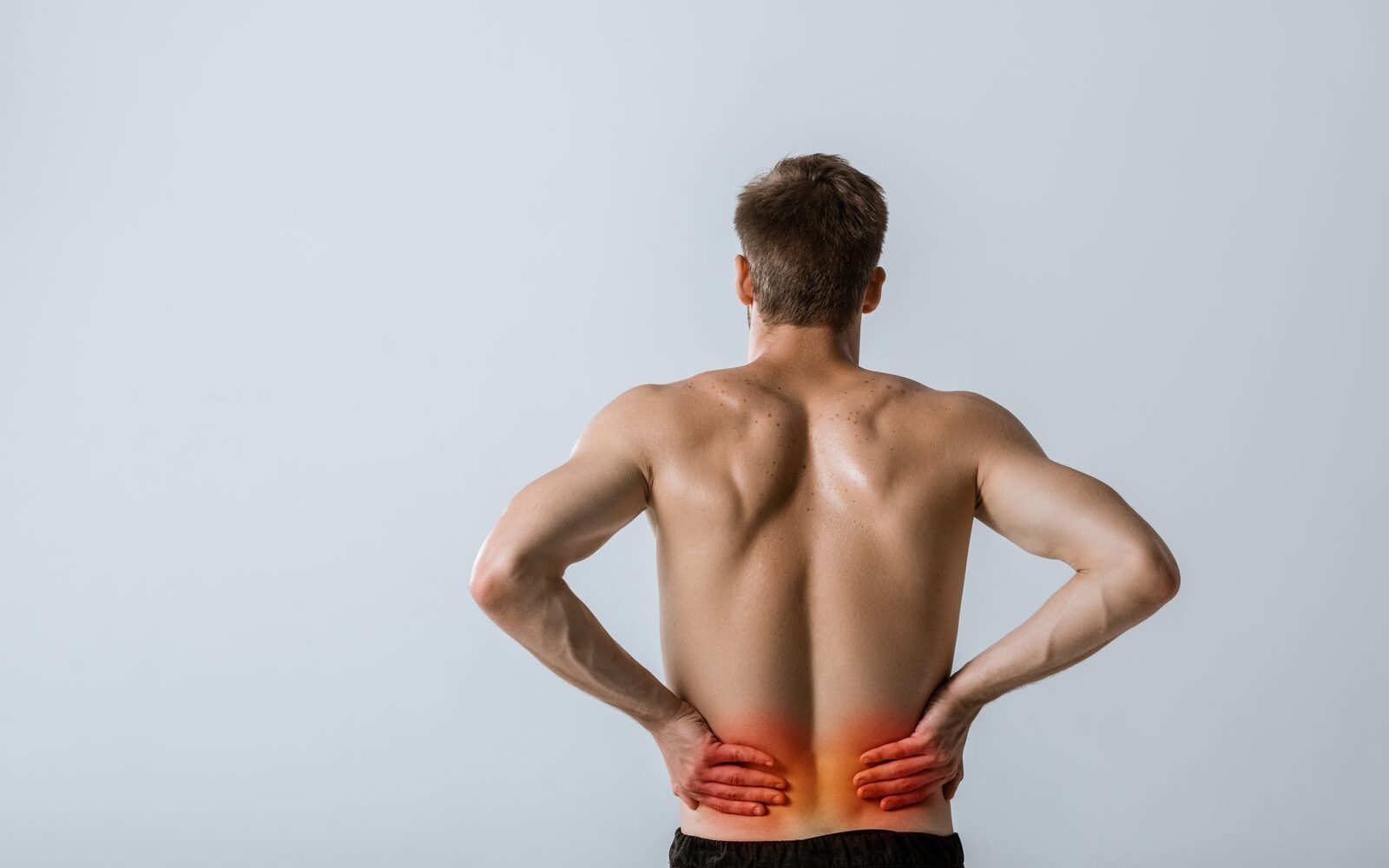
Specialized Care for Arthritis and Degenerative Changes in the Lower Back
Persistent lower back pain and stiffness can sometimes be associated with lumbar spondylosis, a term used to describe age-related and degenerative changes affecting the lumbar spine. These changes can involve the spinal discs, facet joints, vertebrae, and other structures of the lower back.
Lumbar spondylosis does not always cause symptoms. When degenerative changes contribute to inflammation or irritation of pain-sensitive structures, however, patients may experience chronic lower back pain, stiffness, reduced mobility, and difficulty performing everyday activities.
At TOPS Institute, we provide comprehensive evaluation and personalized treatment for lumbar spondylosis and back arthritis in Los Angeles and Beverly Hills. Our approach focuses on determining which spinal structures are actually contributing to a patient’s pain and selecting treatment based on that diagnosis.
Schedule a Consultation
What Is Lumbar Spondylosis?
Lumbar spondylosis refers to degenerative changes of the lumbar spine, the five vertebrae located in the lower back.
Over time, spinal discs may lose hydration and height, facet joints can develop arthritic changes, and bone spurs may form around the vertebrae. Collectively, these changes are commonly described as lumbar spondylosis.
Lumbar spondylosis becomes increasingly common with age, but the presence of degeneration on an X-ray or MRI does not necessarily mean it is the source of a person’s pain.
Some people have significant degenerative changes without symptoms, while others experience persistent pain and limited mobility. For this reason, treatment should be based on the patient’s symptoms, physical examination, and relevant diagnostic findings rather than imaging alone.
Is Lumbar Spondylosis the Same as Back Arthritis?
The terms are closely related but are not completely interchangeable.
Lumbar spondylosis is a broad term describing degenerative changes throughout the lumbar spine. These changes can affect the spinal discs, vertebrae, and facet joints.
Lumbar facet arthritis specifically refers to degeneration affecting the facet joints located at the back of the spine.
When facet joints become arthritic or inflamed, they may become a source of chronic lower back pain. This is often called facet-mediated pain or facet joint pain.
Identifying whether the facet joints or another structure are responsible for symptoms is important because different sources of lower back pain may require different treatments.
What Causes Lumbar Spondylosis?
Lumbar spondylosis generally develops gradually as the structures of the spine change over time.
Factors that may contribute to degenerative changes include:
- Normal aging
- Repetitive stress on the lower back
- Previous spinal injuries
- Physically demanding work
- Genetics
- Changes in spinal discs
- Wear and degeneration of the facet joints
- Previous spinal conditions or procedures
As the spinal discs and joints change, the biomechanics of the lumbar spine can also change. This may place additional stress on surrounding joints and tissues.
Lumbar spondylosis may also occur alongside other spinal conditions, including lumbar degenerative disc disease, lumbar spinal stenosis, disc herniation, and spondylolisthesis.
Symptoms of Lumbar Spondylosis
Symptoms vary considerably from person to person. Some patients have no symptoms despite degenerative changes visible on imaging.
When lumbar spondylosis becomes symptomatic, patients may experience:
- Persistent or recurring lower back pain
- Aching pain across the lower back
- Lower back stiffness
- Reduced spinal mobility
- Pain associated with certain movements or positions
- Pain that worsens after prolonged standing or activity
- Tenderness around the lower back
- Difficulty bending or twisting
- Pain that may extend into the buttocks or upper thighs
When lumbar spondylosis causes narrowing around a spinal nerve, symptoms may also include pain, numbness, tingling, or weakness traveling into the leg.
Radiating nerve pain may indicate lumbar radiculopathy (sciatica) rather than isolated facet-mediated back pain.
Learn More About Lumbar Radiculopathy
How Is Lumbar Spondylosis Diagnosed?
Because degenerative spinal changes are common, diagnosing lumbar spondylosis involves more than simply finding arthritis on an imaging study.
At TOPS Institute, evaluation begins with a detailed discussion of your symptoms, medical history, previous treatments, and how your pain affects daily activities.
Your provider may evaluate:
- The location and pattern of your pain
- Range of motion
- Areas of tenderness
- Movements that reproduce symptoms
- Muscle strength
- Reflexes and sensation when appropriate
- Previous injuries or procedures
- Treatments you have already tried
Imaging such as X-rays, MRI, or CT scans may be used when clinically appropriate to evaluate the vertebrae, discs, facet joints, spinal canal, and surrounding structures.
When facet-mediated pain is suspected, diagnostic medial branch blocks may also help determine whether the nerves supplying the facet joints are contributing to the patient’s pain.
How Is Lumbar Spondylosis Treated?
Treatment depends on the structures causing pain, severity of symptoms, functional limitations, overall health, and response to previous care.
Conservative treatment may include:
- Physical therapy
- Activity modification
- Home exercise
- Appropriate medications
- Core strengthening
- Mobility and flexibility exercises
- Posture and ergonomic modifications
When pain persists despite conservative treatment, interventional pain management procedures may be considered based on the suspected source of symptoms.
Lumbar Facet Joint Injections
The facet joints are small joints located between adjacent vertebrae that help provide stability while allowing the spine to bend and rotate.
When these joints become arthritic or inflamed, they may contribute to chronic lower back pain.
A lumbar facet joint injection delivers medication to the affected facet joint and may be used in selected patients as part of the evaluation or management of facet-related pain.
Learn More About Lumbar Facet Joint Injections
Lumbar Medial Branch Blocks
The medial branch nerves are small nerves that transmit pain signals from the facet joints.
A lumbar medial branch block uses local anesthetic to temporarily interrupt pain signals from specific medial branch nerves. The procedure is primarily used diagnostically to determine whether one or more facet joints are likely responsible for a patient’s lower back pain.
If a patient experiences meaningful temporary relief following appropriately performed diagnostic medial branch blocks, lumbar radiofrequency ablation may be considered as a longer-lasting treatment option.
Learn More About Lumbar Medial Branch Blocks
Radiofrequency Ablation for Lumbar Spondylosis
For appropriately selected patients with confirmed facet-mediated pain, lumbar radiofrequency ablation (RFA) may provide longer-lasting pain relief.
During radiofrequency ablation, controlled radiofrequency energy is used to disrupt the medial branch nerves responsible for transmitting pain signals from the affected facet joints.
The goal is to reduce facet-related lower back pain while helping patients improve mobility and daily function.
Because radiofrequency ablation targets a specific source of pain, diagnostic medial branch blocks are generally performed before determining whether a patient is an appropriate candidate.
Learn More About Lumbar Radiofrequency Ablation
When Should You See a Pain Specialist for Back Arthritis?
Consider an evaluation when lower back pain:
- Persists despite conservative treatment
- Frequently returns
- Interferes with work or exercise
- Makes standing or walking difficult
- Limits bending, twisting, or other movements
- Interferes with sleep or everyday activities
- Has progressively worsened
New or rapidly worsening leg weakness, loss of bowel or bladder control, numbness in the saddle or groin region, or other significant neurological changes require prompt medical evaluation.
Lumbar Spondylosis Treatment at TOPS Institute
Successful treatment of lumbar spondylosis begins with determining whether degenerative changes seen on imaging actually correspond to the source of a patient’s pain.
At TOPS Institute, we take a diagnosis-driven approach to chronic lower back pain. Rather than treating an MRI or X-ray alone, we evaluate symptoms, physical findings, imaging, and response to diagnostic procedures when appropriate.
For patients whose pain originates from arthritic facet joints, treatments such as lumbar medial branch blocks and lumbar radiofrequency ablation may provide targeted options without immediately proceeding to more invasive treatment.
For patients seeking treatment for lumbar spondylosis, back arthritis, or chronic lower back pain in Los Angeles or Beverly Hills, TOPS Institute provides personalized interventional pain management based on each patient’s diagnosis, symptoms, and goals.
Schedule a Consultation
Frequently Asked Questions About Lumbar Spondylosis
Is lumbar spondylosis arthritis?
Lumbar spondylosis is a broad term describing degenerative changes of the lower spine. Arthritis of the lumbar facet joints can be one component of lumbar spondylosis, which is why the condition is sometimes referred to as back arthritis.
Is lumbar spondylosis the same as degenerative disc disease?
No. The conditions can occur together, but they describe different aspects of spinal degeneration. Lumbar degenerative disc disease primarily refers to degenerative changes affecting the spinal discs, while lumbar spondylosis can encompass changes involving the discs, vertebrae, facet joints, and other structures.
Learn More About Lumbar Degenerative Disc Disease
What does lumbar spondylosis pain feel like?
When symptomatic, lumbar spondylosis may cause aching lower back pain, stiffness, reduced mobility, and discomfort associated with prolonged standing or certain spinal movements. Symptoms depend on which structures are involved.
Can lumbar spondylosis cause sciatica?
It can. Degenerative changes associated with lumbar spondylosis may narrow the spaces around spinal nerves. If a lumbar nerve root becomes compressed or irritated, a patient may develop lumbar radiculopathy, which can produce sciatica symptoms such as radiating leg pain, numbness, tingling, or weakness.
Learn More About Lumbar Radiculopathy (Sciatica)
What is the best treatment for lumbar spondylosis?
There is no single treatment that is appropriate for every patient. Treatment depends on the source of pain, severity of symptoms, examination findings, imaging, and response to conservative care. Options may include physical therapy, medications, activity modification, and targeted interventional procedures when appropriate.
Do medial branch blocks treat lumbar spondylosis?
Medial branch blocks are primarily diagnostic procedures used to determine whether the facet joints are responsible for a patient’s pain. If diagnostic blocks provide meaningful temporary relief, radiofrequency ablation may be considered for longer-lasting management of confirmed facet-mediated pain.
Can radiofrequency ablation help back arthritis?
Radiofrequency ablation may be appropriate when arthritic lumbar facet joints have been identified as the source of pain and diagnostic medial branch blocks support the diagnosis. RFA targets the medial branch nerves that carry pain signals from those joints.
Find the Source of Your Chronic Lower Back Pain
An imaging report showing arthritis or degeneration does not necessarily explain why your back hurts. Identifying the specific structure responsible for your symptoms can help guide more targeted treatment.
Schedule a consultation with TOPS Institute in Los Angeles or Beverly Hills for a personalized evaluation of lumbar spondylosis, facet joint arthritis, and chronic lower back pain.
Schedule an Appointment